March 3rd is Doll’s Festival day: A day to pray for the healthy growth and happiness of young girls.

This time we will introduce the Japanese tradition of “Hinamatsuri” (Doll’s Festival).
This event is held on the 3rd of March and is an opportunity for families to pray for the well-being of their daughters.
Decorative Hina-ningyo
Families with young girls display dolls called “Hina-ningyo” inside their homes.
It is said that this is the merging of two cultures.
One is from China, where at the end of March girls are cleansed in the water of the river, and the other is the Japanese tradition of playing with dolls (Hina-asobi).
Initially, paper dolls were released in the river to drive away evil spirits. In the Edo period people began to display the dolls in their homes.
The dolls depict the imperial court, and are dressed in beautiful ancient court costumes.
An Introduction to the Foods Eaten during Hina-Matsuri
We would like to introduce you to several of the foods eaten during the Hina-matsuri.
Hina-arare

This is a pink, green, yellow and white candy.
It is made of nutritious starches and represents the wish that the young girl will be “healthy and happy” all year long.
Hishi-mochi (diamond-shaped mochi)
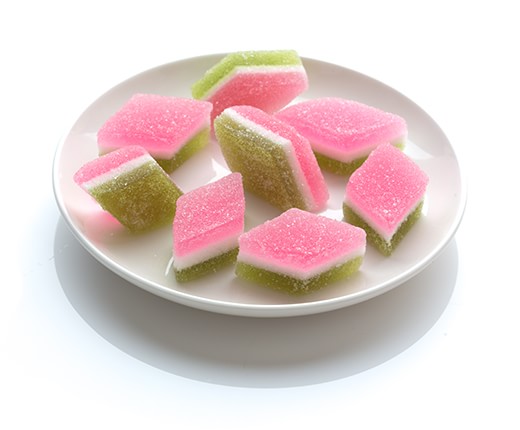
It is said that each color has a meaning. The green represents good health, the white represents cleanliness, and the pink is meant to drive away evil spirits.
Sakura-mochi (Red beans wrapped in mochi rice)
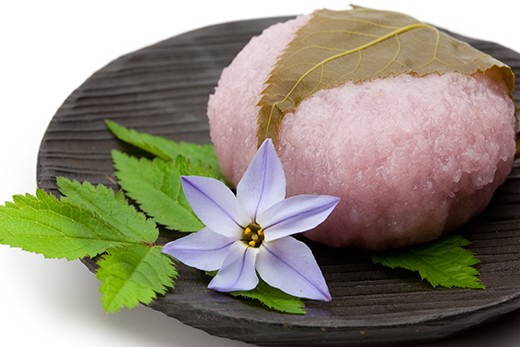
“Hina-matsuri” is also known as the “Momo-no-Sekku” (Peach Festival).
It is said that the pink “sakura-mochi” is eaten because the pink color of sakura represents the peach.
Clam Soup
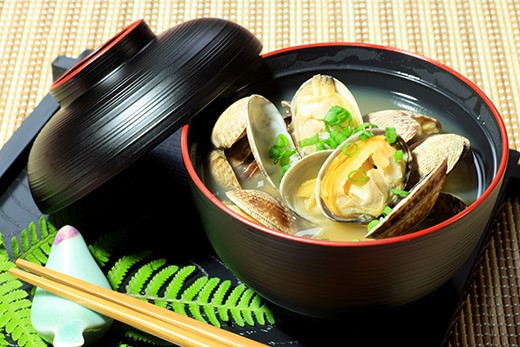
The clam shell represents a married couple with a good relationship and conveys the wish that the daughter will find a good man to spend her life with.
Chirashi-sushi
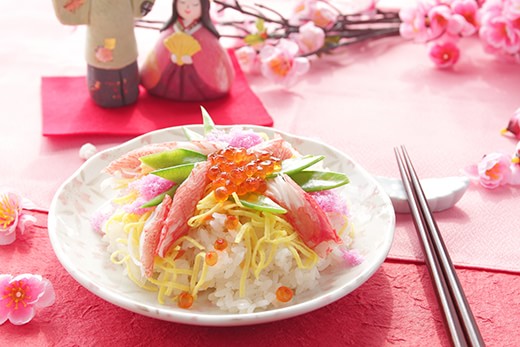
The ingredients of chirashi-sushi each have a meaning. For example, shrimp (long life), lotus root (foresight), and beans (good health).
Momosake
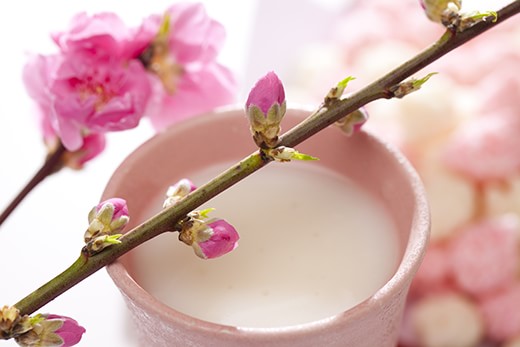
This sake is associated with the peach, which drives away evil spirits and increases energy and physical fitness.
This is the Japanese tradition of “Hina-matsuri.”
If you visit Japan during this season then we hope that you will enjoy viewing the Hina-ningyo on display in department stores.